I Forget I Remember

Funny how often I forget that I remember something. It happened again this morning in the final act of Homecoming 2014 at East Texas Baptist University. Homecoming concludes each year with an early Sunday morning worship service in beautiful Lampsato Chapel, and this year’s service included a hymn that elicited emotions so powerful that I was physically affected (I discreetly wept).

I had forgotten that I remember the moving text of, “My lord is near me all the time.” From the first line, this hymn composed by Barbara Fowler Gaultney awakened deeply embedded childhood memories. One moment I was standing on aching knees and singing in a houndstooth sport coat at Homecoming; the next I was transported back to Trinity Baptist Church in Port Arthur, Texas, sitting as a boy on curved plywood theater seats that were fastened to an asbestos tile floor. Men wore polyester suits with wide ties, women were in knit dresses and panty hose, and choir members wrapped in blue satin robes with gold satin stoles sang out: “When the thunder shakes the mighty hills
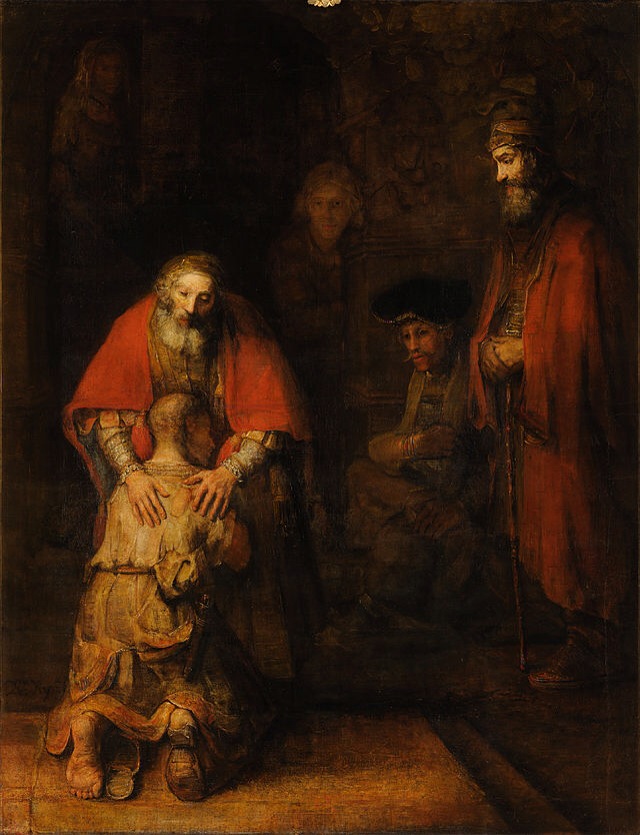
And trembles ev’ry tree, Then I know a God so great and strong Can surely harbor me.” More than anything else I remember God’s closeness. Years later, I read the works of Francis Schaefer, who liked to speak of the “God who is there.” I do not disagree with his theology, but more than ever I cling to the memory that God is near and am increasingly relying on the present reality of a God who is here. I had forgotten that I remember just how much I need a loving Father to embrace and harbor me.

In the lightning flash across the sky
His mighty pow’r I see,
And I know if He can reign on high,
His light can shine on me.

I’ve seen it in the lightning, heard it in the thunder,
And felt it in the rain;
My Lord is near me all the time,
My Lord is near me all the time.

When the thunder shakes the mighty hills
And trembles ev’ry tree,
Then I know a God so great and strong
Can surely harbor me.

I’ve seen it in the lightning, heard it in the thunder,
And felt it in the rain;
My Lord is near me all the time,
My Lord is near me all the time.

When refreshing showers cool the earth
And sweep across the sea,
Then His rainbow shines within my heart,
His nearness comforts me.

I’ve seen it in the lightning, heard it in the thunder,
And felt it in the rain;
My Lord is near me all the time,
My Lord is near me all the time.

(“My Lord Is Near Me All the Time”, words and music by Barbara Fowler Gaultney)

Thingamabob

Thingamabob, doomahickey, whatchamacallit, just some of the words I use when I’m at a loss for other more concrete ones. Advanced academic degrees notwithstanding, I’m often at a loss to describe the simplest of objects. That same dumbfoundedness is the common experience of all authentic worship. Much of what passes for religion these days is too easily explained; holy stuttering is in short supply in post modernity. Very little mystery remains after singing choruses in rounds and learning five points for upgrading one’s life, making church more akin to Wall Street than the Via Dolorosa. “Worship” services (I confess I’ve never understood why they are termed “services”–who exactly is serving and being served anyway?) follow a well rehearsed schedule, such that if the Holy Spirit is to show up at all, she or he had better take care of business in an hour. Performance claims the prize and somehow we’ve convinced ourselves that grand productions draw ‘seekers’ to the Gospel, like so many moths to the flame. Conventional wisdom would tell that if I’m looking for slick entertainment I’ll always find it somewhere other than church, irregardless of how much you spend to convince me otherwise.

Whatever happened to sacred mystery? When did we decide that we could package the Holy Other into bite size portions, easily digested, and as readily forgotten? When was the last time that a glimpse of the Suffering Savior or the Conquering Christ seized your heart and wouldn’t let go? How long has it been since the Ground of all Being grabbed you and you couldn’t speak or cry or move in response? If I am able to fully plan and explain worship, the object must be something other than The One Who Was and Is and Is To Come. True worship elicits wonder, and wonder eventually gives way to transformation.

In the year that king Uzziah died I saw also the Lord sitting upon a throne, high and lifted up, and his train filled the temple. Above it stood the seraphims: each one had six wings; with twain he covered his face, and with twain he covered his feet, and with twain he did fly. And one cried unto another, and said, Holy, holy, holy, is the Lord of hosts: the whole earth is full of his glory. And the posts of the door moved at the voice of him that cried, and the house was filled with smoke. Then said I, Woe is me! for I am undone; because I am a man of unclean lips, and I dwell in the midst of a people of unclean lips: for mine eyes have seen the King, the Lord of hosts. (Isaiah 6:1-5, KJV)

Heaven

I can’t write as an authority on the future state of believers, but I am learning to recognize heaven here and now. Heaven, like grace, is present tense, and I write from personal experience that heaven on earth is living in close proximity to who and what one loves most. In that regards, I have found paradise; more accurately, paradise has found me. The most discerning, scintillating, jocular, and alluring woman I’ve ever known calls me “Darling”; precious grandchildren, daughters and sons-in-law call me “Papa,” intriguing neighbors and special others call me “friend.” I’m blessed with residential space to breathe without urban interference; plank fencing marks our boundaries rather than cement sidewalks, and caliche replaces asphalt. Prominent sounds in the distance are not those of urban sprawl; instead, Barred Owls beckon to one another, a Kingfisher rattles out near the pond, and the ever-present Phoebe wheezes on a nearby limb. And if that’s not enough to qualify as an earthly Elysium, I’m surrounded by books galore (Cicero said “A room without books is like a body without a soul”), enjoy fulfilling employment, retain the semblance of a brain, and, to top it all off, admit to darn good health for a man in his mid-50s.

I would never denigrate the thought and reality of our future state; I do, however, emphasize unapologetically the potential for embracing the Father on this side. I abide best in him, when I work at extolling his grace that benefits this breath and blesses this day. I accept the challenge of not living in the wake of what I once was. In place of always approaching sunset, I choose to rejoice over perpetual sunrise in this life and the next.

Then Peter began to say unto him, Lo, we have left all, and have followed thee. And Jesus answered and said, Verily I say unto you, There is no man that hath left house, or brethren, or sisters, or father, or mother, or wife, or children, or lands, for my sake, and the gospel’s, But he shall receive an hundredfold now in this time, houses, and brethren, and sisters, and mothers, and children, and lands, with persecutions; and in the world to come eternal life. (Mark 10:28-30, KJV)

Dotage

My good friend and neighbor from across the lane enhanced my vocabulary this morning. Our paths typically intersect en route to set out trash for Monday pickup. I look forward to these casual opportunities to swap snippets of theology and offer morsels for meditation throughout the week ahead. A handful of us gather for worship on Sunday nights in Dick’s recording studio near his house, so Monday mornings are a good occasion for reflection. Dick is essentially a philosopher who happens to also be an accomplished musician, and I enjoy when he shares with me what he’s reading at the moment, or an experience that sets him to thinking. Today, my musically inclined philosopher friend shared over trash cans a new word added to his vocabulary from his current reading. The word is “dotage.” He explained that at first he thought it had something to do with doting over someone, like a proud mother does to a cherished son, but that isn’t it at all. It holds a far more sobering meaning. Dotage is the stage of life when health, vigor, and mental faculties deteriorate (“you could live here and look after me in my dotage”). These are declining years, the autumn or even winter of one’s life.

Dick dropped this linguistic bomb then bade me farewell, leaving me to contemplate my own dotage while wearily toting garbage the remaining distance to its appointed place. For some odd reason I suddenly felt years older. Perhaps the soreness in my lower back is not merely muscle strain, it’s muscular degeneration, and the fatigue I feel isn’t caused by overwork, it’s due to deteriorating physique. Almost as suddenly a Scripture sprang to mind that arrested my mental downward spiral: “The steadfast love of the Lord never ceases; his mercies never come to an end; they are new every morning; great is your faithfulness” (Lamentations 3:22-23, ESV). Oh, the wonder of the thought– fresh mercy every morning! I may be sauntering into the autumn of life or slogging unaware through aging’s winter snow, but God’s grace never tires and Christ’s mercy is always young.

Compassion

When brown-bagging solo, I prefer to picnic under the shade of a significant oak that towers above the east side of St. Francis Church on the west edge of downtown Waco. Days like this one are ideal for lowering car windows and allowing autumn zephyrs to blow in and out, finding refreshment in the process. I routinely enjoy these tranquil moments without distraction, which explains my frustration with the young woman who interrupted my Taco Bell Deal #4 by approaching and sitting on the steps nearby, disturbing my solitary peace in this cherished space. Her arrival annoyed me and I was about to depart in frustration when I looked closer and noticed that she was both pregnant and crying. The teenager was speaking with someone on a cell phone and from her gestures and expression I could see the conversation wasn’t going well, her end of it anyway. Annoyance yielded to compassion and I paused to pray for resolution of all that was distressing and leaving her in tears. For all I know, her life and that of her unborn child hung in the balance of that conversation.

Life is fragile and deserves awareness. How often do life and death struggles wage war under my nose with no acknowledgement whatsoever on my part? How frequently am I stone cold oblivious to the damage done to human dignity by preoccupation with myself? I cannot say that my prayer helped the young lady observed from behind my windshield, but I can say that it softened me towards the angst of a fellow human being. In the end, prayer is more for my sake than for God’s, and compassion changes me far more than it changes anyone else. “Compassion asks us to go where it hurts, to enter into the places of pain, to share in brokenness, fear, confusion, and anguish. Compassion challenges us to cry out with those in misery, to mourn with those who are lonely, to weep with those in tears. Compassion requires us to be weak with the weak, vulnerable with the vulnerable, and powerless with the powerless. Compassion means full immersion in the condition of being human” (Henri Nouwen).

IMG_1029.JPG

Anniversary

A war is raging in this country over the meaning of “marriage.” While our nation struggles to define it, I rejoice over the honor of being husband to the most wonderful woman in the world. To be honest, I’ve not always been so positive about marriage, and confess that my wife has everything to do with my revised view of wedded bliss. Today is our wedding anniversary and we will enjoy an evening out together as most husbands and wives do annually, but my heart-celebration is not confined to one day a year. Daily I’m humbled by our common life, and the uncommon love I receive from the tender woman who chooses to share her life with me. The fact that Jo Beth said “I do” all those years ago can only be chalked up to temporary insanity, but may the madness continue a lifetime and beyond.

My own good fortune reminds of something G.K. Chesterton wrote some time ago:
“Very few people ever state properly the strong argument in favor of marrying for love or against marrying for money. The argument is not that all lovers are heroes and heroines, nor is it that all dukes are profligates or all millionaires cads. The argument is this, that the differences between a man and a woman are at the best so obstinate and exasperating that they practically cannot be got over unless there is an atmosphere of exaggerated tenderness and mutual interest. To put the matter in one metaphor, the sexes are two stubborn pieces of iron; if they are to be welded together, it must be while they are red-hot. Every woman has to find out that her husband is a selfish beast, because every man is a selfish beast by the standard of a woman. But let her find out the beast while they are both still in the story of ‘Beauty and the Beast'” (“The Common Man”).
My wife and I are still in the story, and never want it to end. No doubt I caught her in a weak moment, but I’ll never let her go.
And the Lord God caused a deep sleep to fall upon Adam, and he slept: and he took one of his ribs, and closed up the flesh instead thereof; And the rib, which the Lord God had taken from man, made he a woman, and brought her unto the man. And Adam said, This is now bone of my bones, and flesh of my flesh: she shall be called Woman, because she was taken out of Man. Therefore shall a man leave his father and his mother, and shall cleave unto his wife: and they shall be one flesh. (Genesis 2:21-24, KJV)