Seasons

“Companions as we are in this work with you, we beg you, please don’t squander one bit of this marvelous life God has given us.” (2 Co 6:1 The Message)

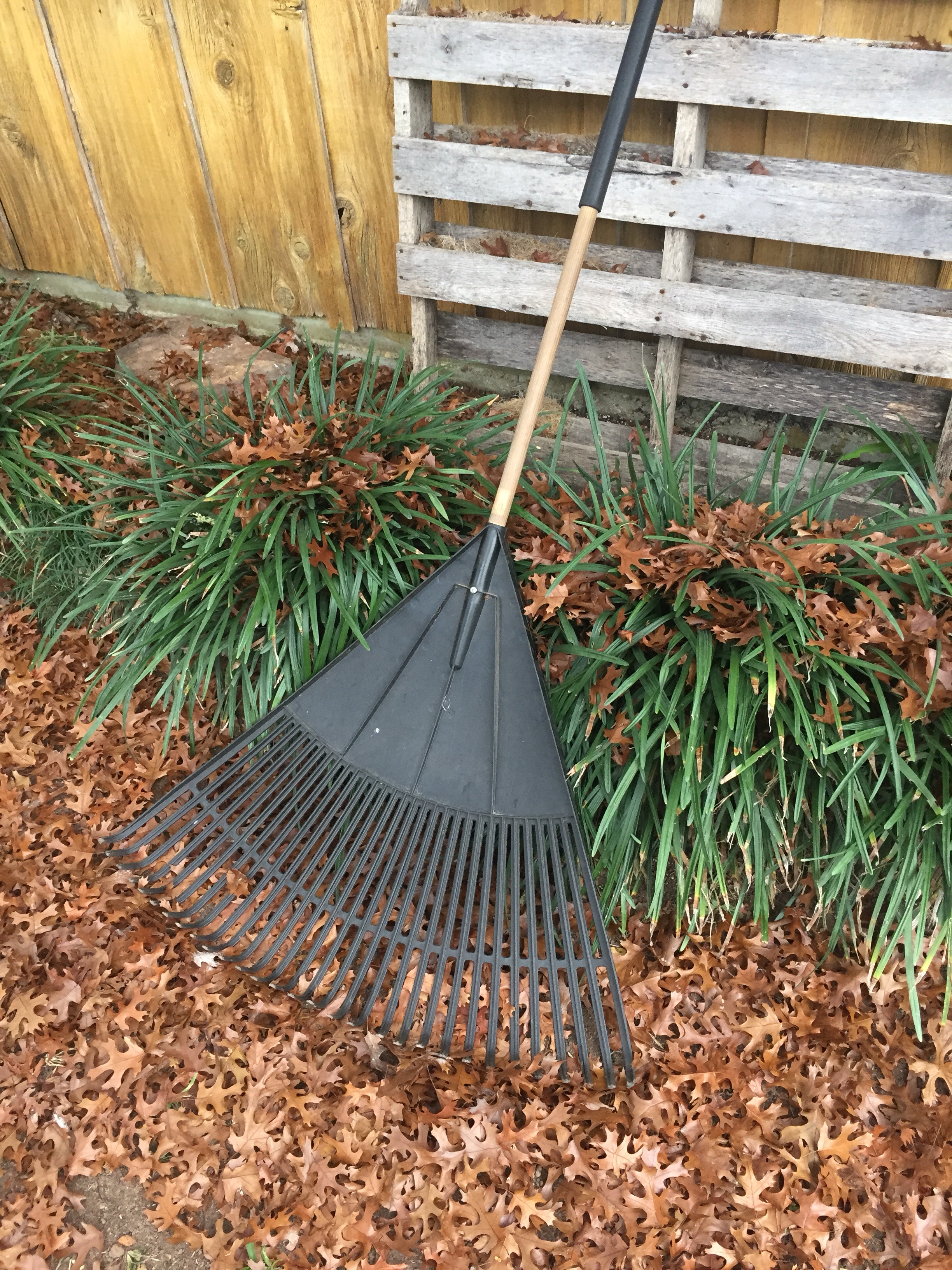
Leaf raking is sacred activity. It takes a higher toll on my body these days than when I was a younger man, but the pain is worth the payoff. The glory of God abounds in the most common occurrence if we look long and hard enough to see it. I may groan inwardly when the accumulated effect demands the raking of leaves and trimming of bushes so we can see the sidewalk and remember Grass is under there somewhere, but deep down I don’t mind fallen leaves. Most of the ones I’m gathering turned color before turning loose their grip on branches overhead. I love seasons, largely because growing up in Port Arthur we only experienced two of them—hot and hotter. Autumn brings out the artist in us all. There is something magical about leaf snow and branches that become paintbrushes. Fall is as colorful as spring, but the palette is different. Muted tones of bronze, sienna, and ochre poised overhead await the inevitable.

I am sensitive to seasons more now than ever before because I have entered the autumn of my own experience. It may be winter and I just don’t know it, but at least, on average, I have time for a slow fade before sunset hastens behind the horizon. The challenge is not the fading of the light, it is mustering the courage to enjoy what’s left of it. What might I learn of my Creator and myself if I refuse frenetic activity and walk rather than run into winter? I want more than to stop and smell the roses, I want to know their names and to distinguish between tea roses, Floribundas and Grandifloras. Look deep into every moment and you will find enough of the Almighty to set you daydreaming of eternity. Autumn turns our attention toward winter and leaves us longing for spring, but be careful not to squander the journey home.

Ashes and Forgiveness

“To be a Christian means to forgive the inexcusable because God has forgiven the inexcusable in you.”~C. S. Lewis

We met Andy in the least likely of places. My wife and I hiked carefully down the saturated earthen slope to view The Basin where water cascades into a granite bowl and whirlpools around its walls. American naturalist Henry David Thoreau stood on the same spot on his first trip to the White Mountains in September of 1839, and later wrote in his Journal: “This pothole is perhaps the most remarkable curiosity of its kind in New England.” Samuel Eastman in his White Mountain Guide called this spot, “One of the beautiful haunts of Nature, a luxurious and delicious bath fit for the ablutions of a goddess.” High praise indeed for a boiling pot of frigid liquid. Standing on the rim of this natural marvel was a young woman with long dark hair and even longer quilted down coat. She turned to look at us through round black spectacles, greeted us, then asked without blinking if we would use her phone to shoot a video while she spread ashes over The Basin. Andy explained that her mother had died the year before and that she was traveling literally across the globe to sprinkle her mother’s remains in meaningful places. I accepted her phone and awesome responsibility, asked how to manipulate the video controls, and proceeded to miss the shot as she sprinkled her mother over the swirling water. I was crushed, having failed to capture this once-in-a-lifetime moment. I confessed as such to Andy and waited for tears to fall in response, but she simply smiled and said, “Don’t worry. Let’s try again.” More of her mother remained in a ziplock plastic bag, and fortunately I got it right the second time.

Grace is not escape; it is engagement at the highest level of risk, and forgiveness is the remedy for everything. This is why the chief of sinners was also the most prolific evangelist and church planter the world has ever known. Fortunately for me and you, we are forgiven, not only for past failures, but for all future blunders we’ve yet to commit, what Piper calls “Future Grace.” The only possible way to avoid hypocrisy and self-loathing is to step ever deeper inside the labyrinth of forgiveness. We were never intended to wander looking sadly behind, lost in a world of anonymous bridges. Forgiveness begins with believing in Jesus Christ; it flourishes as we forgive ourselves. But which sins are forgiven? “I am writing to you, little children, because your sins have been forgiven you for His name’s sake” (1 John 2:12/ NASB). Our English Bibles do not grant the fullest sense of the Greek word translated as simply “forgiven.” The Greek tense is a perfect participle, referring to something that has occurred in the past and is continuing into the present. This means that all of the past and present sins of Christians have been erased, never to be recalled. We are pardoned not because we actively confess our sins each day, but because God declared us “whole” the moment we truly believed. 

After Andy walked away with her mother in her pocket, I watched a leaf surrender today to the cold and pirouette into the whirlpool. I oddly felt sorry for the Sugar Maples, dropping what they worked so hard to nurture and retain, but I watched as other leaves followed suit. Forgiveness means the final curtain never has to fall; this moment is not the final word for those who live by Grace.

Weapons

My wife and I journeyed to celebrate our wedding Anniversary on a brief getaway to New Hampshire. I assured her as we left home in Waco that I would “unplug” so as to enjoy these days together without intrusion or distraction; however, repugnant reality has a way of worming its way back in despite our best intentions. As we arrived at our picturesque lodging nestled among autumn brilliance in the White Mountains, I received a sequence of text messages informing of the dastardly actions of a lone lunatic in diminutive Sutherland Springs, Texas. My heart instantly ached for fathers and mothers, brothers and sisters, sons and daughters, and a pastor who lost more than any should be asked to bear. Christ said he would build his church and that the gates of hell would not prevail against her, but this day it feels like there is a crack in heaven and evil is reveling in itself. I catch myself saying “All I can do is pray,” as if prayer is a last futile effort-more of a polite gesture than powerful intercession. Instead, I will refuse the urge to shoulder shrug and dismiss the opportunity to bear this burden. I will pray for those who survived along with the families of those who did not. I will plead with heaven on behalf of a country church, a rural Texas town, and church members across this land who will gather next Lord’s Day looking over collective shoulders. 

Prayer is not futility; it is warfare on the highest plane. Believers battle best when turn to the Father and refuse to relinquish this world to the enemy. Patrick Henry concluded his March 1775 address with the immortal line, “I know not what course others may take; but as for me, give me liberty or give me death!” Henry’s speech convinced the Second Virginia Convention to raise militias, and many Virginia militia recruits marched under banners emblazoned with “Liberty or Death,” and some even sewed the words onto their shirts. We, too, march under a banner; only ours brandishes the word “Love,” and we employ its admonition by refusing fear and praying the prayer our Lord taught us:

“Our Father which art in heaven, Hallowed be thy name. Thy kingdom come, Thy will be done in earth, as it is in heaven. Give us this day our daily bread. And forgive us our debts, as we forgive our debtors. And lead us not into temptation, but deliver us from evil: For thine is the kingdom, and the power, and the glory, for ever. Amen.”

Transistor Radio

“Memories of childhood were the dreams that stayed with you after you woke.” ~Julian Barnes

Childhood memories lend texture to adult experiences that at time baffles because certain moments exceed the level of significance one might expect. That explains why this year’s World Series was more to me than an epic battle between two evenly matched teams playing America’s game on the largest possible stage. Earliest childhood memories include my father, a transistor radio, and the Houston Astros. These were the boys of the Dome, and our connection to them was via AM radio waves. We lived a mere hour from Houston, but a boilermaker’s salary did not allow for tickets to view games in person, so we did the next best thing–we listened and imagined. To this day, I prefer radio because of the images I conjure born of imagination. Our evening ritual found us either outside piddling in the garage or sprawled across my parent’s’ bed playing cards, but regardless the activity we listened to our team night after night. Watching the Astros win the World Series was dreamlike, and it was wonderful to share the moment with my wife, an avid ‘Stros fan in her own right, but I cannot help but imagine what it would have been like to hear the final out described and triumph declared over the radio with Dad nearby–the Houston Astros are World Series champions!

Refuge

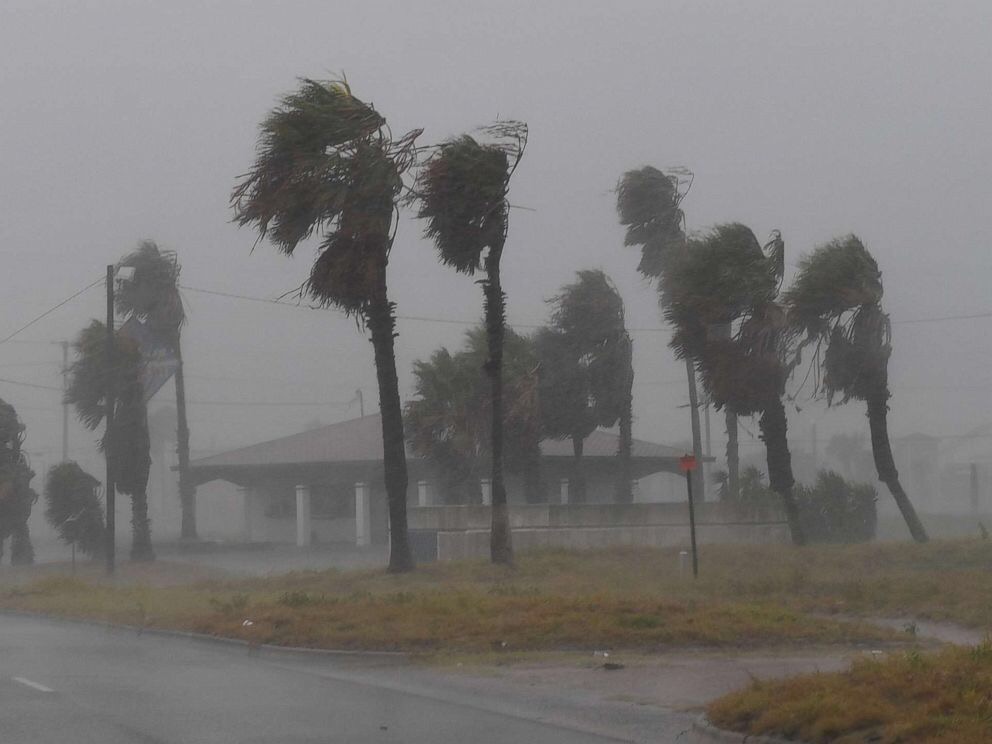
Our confidence in Christ as refuge and fortress in the storm builds as we discern His presence in all ordinary moments of human existence. Jesus does not “show up” in times of trouble; He is always with us. Blessed be the name of the Lord!

Retaining Scars

“In the secular view, suffering is never seen as a meaningful part of life but only as an interruption.” ~ Tim Keller

A noticeable scar still protrudes above my left kneecap, although it is barely visible to the unknowing eye. I feel no pain from the wound because it healed over fifty years ago, but I remember the reason it is there–it signifies very little to others, but leaves an inescapable impression on me. Stated simply, I remember the reason for the wound. A seven-year-old cannot understand the intent underlying every parental injunction, and I was no exception to the rule. Mine warned me not to run down the narrow cement sidewalk bordered by a brick flower bed that led to our front door, especially when coastal humidity gathered on the concrete surface creating an ice-effect in the tropical climate. I refused to heed the warning, and instead turned it into a game when Mom and Dad were not looking. On one particularly balmy day, I failed to navigate the turn near the far end of the brick enclosure, jamming my knee into its jagged edge. The brick sliced deep, and the cut opened the shallow skin, exposing blood and tissue. Stitches would have helped, but we were not emergency room types. That was the last time I disobeyed my parents with regards to running on the sidewalk. Fifty years is a long time to heal, but I remember my misguided choice each time I bend and catch a glimpse of the unnaturally bunched skin on my knee. The pain is gone, but the warning remains. 

No one and no society can avoid scars. We are not perfect people and this is not a perfect world; to pretend that we are and that we were in the past is lunacy. It is not only unwise to attempt to rewrite history and remove all visages of past atrocity, it is dangerous. Scars serve a purpose; they teach by warning against replicating failure. There are things in my past I would love to forget, but choose to remember so as not to repeat them. I refuse to relinquish memory and forfeit the benefit of my wounds. Scars are defined as marks left on the skin or within body tissue where a wound, burn, or sore has not healed completely and fibrous connective tissue has developed, but they hold greater significance if they are blemishes from our past. It is not perfection, but healing that defines us. Cosmetic surgery could smooth the skin, but doing so would rob me of the benefit of wound.

Slogging Through

“But I do not count my life of any value to myself, if only I may finish my course and the ministry that I received from the Lord Jesus, to testify to the good news of God’s grace.” ~St. Paul (Acts 20:24 | NRSV)

It is a good thing we don’t know the outcome before beginning; most wouldn’t have courage enough to initiate the journey. This life is anything but a cakewalk for the vast majority, meaning perseverance trumps giftedness. It is likely that the preacher had this in mind when he quipped:

“Again I saw that under the sun the race is not to the swift, nor the battle to the strong, nor bread to the wise, nor riches to the intelligent, nor favor to the skillful; but time and chance happen to them all” (Ecclesiastes 9:11 | NRSV).

While most enjoy occasional triumphs along the way, much of life is spent slogging through the mundane. As a younger man I eschewed anything that smacked of ordinariness; in my latter triad of life I am discovering that God rests in the people and experiences easily taken for granted. The everydayness of our existence will never enjoy good press, simply because it is so, for lack of a better word, common. You must grant yourself permission to discern grace in the commonplace. This is more than stopping to smell the roses. It is reveling in the rose’s glory and, more importantly, finding delight in its Creator who designed such beauty for our enjoyment. Make today an experiment that may change your life: Look hard to detect meaning in the most mundane aspects of your day, and then voice praise to your Heavenly Father for granting that moment or person or trial for your benefit. If Scripture is true in stating that God gives good gifts to his children, this day is replete with gifts waiting to be unwrapped by the discerning heart. Do yourself a favor as Brother Lawrence did, and practice the presence of God by establishing an altar in your heart that turns each moment into fuel for red hot passion for Holy God. In so doing, you will discover not only joy for the journey, but endurance needed to finish well. 

Disagreement

“‘That was excellently observed’, say I, when I read a passage in an author, where his opinion agrees with mine. When we differ, there I pronounce him to be mistaken.” ~Jonathan Swift

We are not all the same, but we were never intended to be. A single note holds meaning, but greater beauty is produced by dissimilar notes pressed into service cooperatively. Single notes sound forth a simple melody, but chords navigate and convey the complexity of a symphony. The larger question in life is not how to avoid conflict, but rather, how do I manage dissonance? I rarely read authors with whom I know I fully agree. Frankly, I am convinced of what I believe, making it all the more critical that I test those beliefs against divergent voices. I am stretched to think deeply when someone challenges my sacred presuppositions and forces me to reexamine in light of Scripture rightly divided. The individuals that help refine me are those who refuse to accept me at face value and push to see if there is substance behind profession. Disagreement may be voiced in love. There is no plot without conflict; I am able to improve because of friction rising from dissonance. Never give hatred a foothold. Choose to rise above anger and learn from it. Re-evaluate your position and humbly admit when you are wrong. “One of the truest signs of maturity is the ability to disagree with someone while still remaining respectful” (Dave Willis). Humble yourself by refusing to gloat when you are right. Whether we want to admit it or not, we do not grow in an environ of sameness. We flourish as we push back from what we recognize of ourselves in those we oppose, and as we give the Father space and permission to prune us in the process.

Words Are Life

“There is nothing to writing. All you do is sit down at a typewriter and bleed.” ~Ernest Hemingway

Imagination budded as a child and written expression gave it wing to soar. I learned the comfort of words and the ecstasy of a reader’s admiration. Literary growth stalled in my youth as creativity succumbed to academic necessity. What began as an extension of myself muddled into stifling limitation, graded boxes that confined imagination. I place no blame for this on my teachers or curriculum, realizing the responsibility rests squarely on my shoulders. In college, I found new pleasure in research and academic writing that in turn prepared me for fulfillment through sermon preparation. I rarely read from a manuscript when preaching, but preparation for oral expression comes primarily through written construction. Words are life.

In the late afternoon of life, I am discovering writing as calling; or perhaps I should say that writing is uncovering me. Instead of sudden insight, self-awareness more naturally unfolds like a quilt removed from cedar chest storage and unfurled into winter service. Personal exploration may be excruciating, but it is necessary preparation for higher expression. All that is to say that I write these days with hope that my words shaped by moral and spiritual underpinnings will linger long after I’m gone. Find what it is that allows you to most fully be yourself, and express it in such a way that others may be altered by it. What we do in life should grow beyond our death. Each of us is called to outlive ourselves. 

Fireworks and Fireflies

“Simplicity is the glory of expression.” ~Walt Whitman

We heard fireworks last night disturb the distance. At first I thought our grandchildren were having a late night soirée because our daughter had texted earlier to tell us they stopped by one of the numerous temporary stands to buy enough sparklers, Roman candles, and assorted noise makers to mark well the Birthday of our nation. When I looked at the time on my phone, I realized it was far too late for them to be outside disturbing the peace. I listened closely and recognized the sounds were reaching us from a decent span away. I decided to step outside anyway to see if any light displays accompanied the staccato blasts. I walked slowly up our circular drive and along the wooden fence that divides our place from the horse pasture to the south of us. Intent on determining proximity of the fireworks, I almost missed seeing the flash of light over my shoulder. The bright yellow blink was followed by another and still another, nudging me to turn around in the effort to discover their origin. I ended up witnessing a grand display of fireflies chasing one another with strobelike effect; however, much more was taking place than met my uninitiated eye. 

According to the Smithsonian Institute, fireflies have short lifespans. An adult firefly lives only long enough to mate and lay eggs—the larvae usually live for approximately one year, from mating season to mating season, before becoming adults and giving birth to the next generation. They are winged beetles, commonly called fireflies, lightning bugs, or glow worms for obvious reasons. What may not be quite so obvious is the underlying purpose for their conspicuous bioluminescence during twilight. Fireflies emit light mostly to attract mates, although they also communicate for other reasons as well, such as to defend territory and warn predators away. In some firefly species, only one sex lights up. In most, however, both sexes glow; often the male will fly, while females will wait in trees, shrubs and grasses to spot an attractive male. If she finds one, she’ll signal it with a flash of her own. In some places at some times, fireflies synchronize their flashing. What appears as intermittent illumination is actually drama on a grand scale.

I frequently pursue the distant darkened rumble at the expense of enjoying spectacular bursts closer at hand. We are wired to crave the spectacular; theatrics trump commonplace for most of us. We prefer the stage or silver screen to the backyard. I can remember as a child expecting to hear symphonic scores trolling as I went through the motions of adolescence. There is glory in the ordinary if we will pull ourselves from distant thunder and recognize what lies closest at hand. A grandchild’s grin, your spouse’s touch, the laughter of a friend, a moment to sit and reflect on the gift each breath brings–these are the currents of splendor waiting to be embraced and cherished. Glory abounds for those intent on finding it. Will I chase after fireworks or treasure fireflies?


(Photo from the Natural History Museum of Utah)