Words Are Life

“There is nothing to writing. All you do is sit down at a typewriter and bleed.” ~Ernest Hemingway

Imagination budded as a child and written expression gave it wing to soar. I learned the comfort of words and the ecstasy of a reader’s admiration. Literary growth stalled in my youth as creativity succumbed to academic necessity. What began as an extension of myself muddled into stifling limitation, graded boxes that confined imagination. I place no blame for this on my teachers or curriculum, realizing the responsibility rests squarely on my shoulders. In college, I found new pleasure in research and academic writing that in turn prepared me for fulfillment through sermon preparation. I rarely read from a manuscript when preaching, but preparation for oral expression comes primarily through written construction. Words are life.

In the late afternoon of life, I am discovering writing as calling; or perhaps I should say that writing is uncovering me. Instead of sudden insight, self-awareness more naturally unfolds like a quilt removed from cedar chest storage and unfurled into winter service. Personal exploration may be excruciating, but it is necessary preparation for higher expression. All that is to say that I write these days with hope that my words shaped by moral and spiritual underpinnings will linger long after I’m gone. Find what it is that allows you to most fully be yourself, and express it in such a way that others may be altered by it. What we do in life should grow beyond our death. Each of us is called to outlive ourselves. 

Fireworks and Fireflies

“Simplicity is the glory of expression.” ~Walt Whitman

We heard fireworks last night disturb the distance. At first I thought our grandchildren were having a late night soirée because our daughter had texted earlier to tell us they stopped by one of the numerous temporary stands to buy enough sparklers, Roman candles, and assorted noise makers to mark well the Birthday of our nation. When I looked at the time on my phone, I realized it was far too late for them to be outside disturbing the peace. I listened closely and recognized the sounds were reaching us from a decent span away. I decided to step outside anyway to see if any light displays accompanied the staccato blasts. I walked slowly up our circular drive and along the wooden fence that divides our place from the horse pasture to the south of us. Intent on determining proximity of the fireworks, I almost missed seeing the flash of light over my shoulder. The bright yellow blink was followed by another and still another, nudging me to turn around in the effort to discover their origin. I ended up witnessing a grand display of fireflies chasing one another with strobelike effect; however, much more was taking place than met my uninitiated eye. 

According to the Smithsonian Institute, fireflies have short lifespans. An adult firefly lives only long enough to mate and lay eggs—the larvae usually live for approximately one year, from mating season to mating season, before becoming adults and giving birth to the next generation. They are winged beetles, commonly called fireflies, lightning bugs, or glow worms for obvious reasons. What may not be quite so obvious is the underlying purpose for their conspicuous bioluminescence during twilight. Fireflies emit light mostly to attract mates, although they also communicate for other reasons as well, such as to defend territory and warn predators away. In some firefly species, only one sex lights up. In most, however, both sexes glow; often the male will fly, while females will wait in trees, shrubs and grasses to spot an attractive male. If she finds one, she’ll signal it with a flash of her own. In some places at some times, fireflies synchronize their flashing. What appears as intermittent illumination is actually drama on a grand scale.

I frequently pursue the distant darkened rumble at the expense of enjoying spectacular bursts closer at hand. We are wired to crave the spectacular; theatrics trump commonplace for most of us. We prefer the stage or silver screen to the backyard. I can remember as a child expecting to hear symphonic scores trolling as I went through the motions of adolescence. There is glory in the ordinary if we will pull ourselves from distant thunder and recognize what lies closest at hand. A grandchild’s grin, your spouse’s touch, the laughter of a friend, a moment to sit and reflect on the gift each breath brings–these are the currents of splendor waiting to be embraced and cherished. Glory abounds for those intent on finding it. Will I chase after fireworks or treasure fireflies?


(Photo from the Natural History Museum of Utah)

Judging

“As long as we continue to live as if we are what we do, what we have, and what other people think about us, we will remain filled with judgments, opinions, evaluations, and condemnations. We will remain addicted to putting people and things in their “right” place.” ~ Henri J. M. Nouwen

Walking the circuit comprised mainly of Horseshoe Bend is as close to an evening ritual as we get. Heading back home, my wife and I walked up on a woman gesticulating animatedly near the intersection with Rock Creek Road. Wary of a disturbed mental state, I moved between her and my wife. On closer observation, we saw that she was in her right mind and merely pointing excitedly across the road in the direction of dense vegetation and two towering elms. We heard them before seeing them. Mature owls were attempting to distract from young offspring in the trees. A family of barred owls calls our neighborhood home, and I’ll be the first to admit that their monkey calls to one another and stealth sightings are a pretty big deal. Still, the woman who first spotted them near the Bend was giddy to the point of appearing odd, and I said as much to me wife when we made our way around the S curve near the private lane we call home. I dismissed the strange woman’s worth and sanity with a sweeping statement something to the effect of, “That woman is crazy.” I stopped mid-sentence and remarked, “I’m judging aren’t I? Please forgive me.” Of all people, I have no right to judge anyone else, especially someone simply expressing enthusiasm over a seldom seen owl encounter.

I am offended by the world, largely because I see far too much of myself reflected in it. My heart rages at injustice, yet I detect my own prejudices staring back at me. I rant against liberal leanings and aberrant morality, but turn away in shame from the hypocrisy of my conservative theological and political stance juxtaposed against leniency toward sin in my own life. I cry out for light in a darkened world while refusing to be that light in fear it may cost too much, or anything for that matter. While proudly declaring myself Christian, all too often I fail to behave like Christ. Thank God there is hope for hypocrites like me. Recognizing our penchant for being spiritually two-faced is a first step toward singular devotion to Jesus Christ that transforms thought, behavior, and allegiance. Lower your head in confession, then raise it with your jaw set to live as Christ among a fallen humanity still waiting for someone to offer a hand up.

“The gospel is absurd and the life of Jesus is meaningless unless we believe that He lived, died, and rose again with but one purpose in mind: to make brand-new creation. Not to make people with better morals but to create a community of prophets and professional lovers, men and women who would surrender to the mystery of the fire of the Spirit that burns within, who would live in ever greater fidelity to the omnipresent Word of God, who would enter into the center of it all, the very heart and mystery of Christ, into the center of the flame that consumes, purifies, and sets everything aglow with peace, joy, boldness, and extravagant, furious love. This, my friend, is what it really means to be a Christian” (Brennan Manning).

Punching Holes in the Night

“Faith is the strength by which a shattered world shall emerge into the light.”~ Helen Keller

Words hold potential to convey both meaning and sentiment, but every now and then fall short on both counts. At times, words won’t flow at all; herein lies my predicament. I fully intended to post compelling accounts of my encounters in Iraq, but each attempt ends in an unnerving swell of emotion that demands I turn away from the task at hand in order to weep and pray over the most horrific and hopeless contexts I have witnessed in nearly forty years of global ministry. Evil is neither philosophical abstract nor pigeonhole for whatever goes wrong in the world. It has a name-ISIS, whose hideous malevolence darkens the countenance of the innocent. While walking through the burned-out shell of a church near Mosul, Iraq, Franklin Graham’s translator told him that the Islamic State of Iraq and Syria graffiti scrawled on the walls read, “You love life, we love death.” Members of ISIS had painted their flag and written, “We have come to drink your blood.” The full import of war can never be fully measured by calloused assessment of casualties and mass migrations, it is painfully recorded in hollow eyes and blank stares, in ragtag children forced to scrounge for food and live in plastic tents if they’re luck enough to call one home, in a mother raising a family of eight or more in a tent too small for half that many, in children that dream at night with no hope for tomorrow. Dignity is at a premium when life is reduced to living one cup of water at a time. 

Perhaps the starkest contrast for me in Iraq was standing in the Samaritan’s Purse emergency field hospital near the curtained off room where the injured lie who have no hope of life. They come there to die. A handwritten sign above the simple bed instructs the medical staff to secure a replacement before leaving the space. Someone sits at all times with the terminally injured while they step over the threshold to whatever awaits them beyond this life. Indiscriminate compassion trumps evil. Love flourishes in tears, and hope finds purchase in hearts cleansed by Jesus against the backdrop of blood smeared bodies and missing limbs. Evil does not deserve the spotlight; Christ definitely does. It is especially difficult for me to write about the night because I choose to linger on the light, however meager it may seem at the moment. Buechner speaks of this early in his writing: “…although many modern writers have succeeded in exploring the depths of human darkness and despair and alienation in a world where God seems largely absent, there are relatively few who have tried to tackle the reality of whatever salvation means…Sin is easier to write about than grace, I suppose, because the territory is so familiar…I was too occupied with my job to think much about the next novel I myself might write, but it occurred to me that, if and when the time ever came, it would be the presence of God rather than his absence that I would write about, of death and dark and despair as not the last reality but only the next to the last.” I push beyond the veil of hopelessness and choose to dwell on glimpses of redemption. I hold on to the memory of standing in a displacement camp for those forced to flee from their homes in Mosul and cooing to fourteen-day-old survivor Shahem whose name means “strong.” I choose to remember Milad who has lost everything of earthly value yet proudly declares his name means “Jesus came.” I lift my heart and pray for the ministry of Grace Community Center near Khanke IDP camp, where 16,000 Yazidis live in tents with another 25,000 outside the camp. The Center reaches out to survivors of mass genocide and a living hell at the hands of ISIS. Many of those finding refuge at the Center are girls who have escaped unspeakable slavery, and for the first time in a very long time are surrounded by people who care and offer restoration in Jesus’ name. Evil cannot hold a candle to hope. Darkness boasts that victory belongs to the shadows, but light triumphs by punching holes in the night.

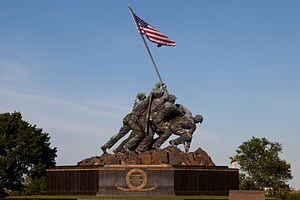
Memorial Day

Love is not love

Which alters when it alteration finds,

Or bends with the remover to remove.

O no, it is an ever-fixed mark

That looks on tempests and is never shaken;

It is the star to every wand’ring bark,

Whose worth’s unknown, although his height be taken.” ~William Shakespeare (Sonnet 116)

“No one has greater love than this, to lay down one’s life for one’s friends.”(John 15:13 | NRSV)

Sacrifice demands we remember. We pause in silence because greatest love leaves us speechless. Such remembering stops us in our tracks, and so it should because every human offering made in place of another is a sacred act that harkens back to the ultimate self-oblation by Jesus Christ on a Roman cross. This flies in the face of society that values self-preservation more highly than all else. The most unsettling element of sacrifice is that it transfers greater responsibility; martyrs pass on a sacred baton. Ours is to ensure that selfless acts are not offered in vain. “Sometimes when you sacrifice something precious, you’re not really losing it. You’re just passing it on to someone else” (Mitch Albom). The ones we pause to remember bequeathed a glorious burden to validate liberty; God grant us courage and opportunity to add punctuation to their selfless acts. 

It Pays to be Nosy

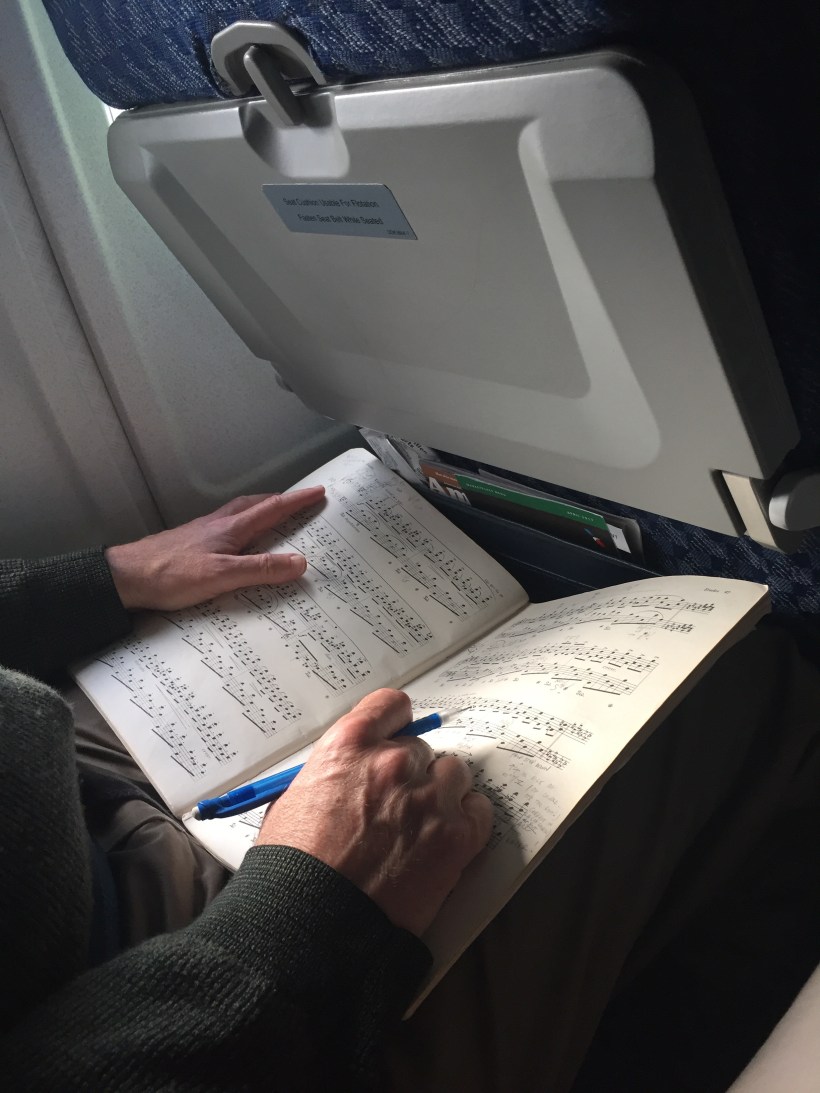
Sometimes it pays to be nosy. The first leg of my journey to Iraq initiated at Waco Regional Airport. I am fortunate to live ten minutes from an American Eagle stop that allows me to hop over to Dallas-Ft. Worth International Airport. From there I can travel, quite literally, anywhere in the world. An aisle seat is priority due to a goodly measure of claustrophobia, so I settled contentedly into 13B just before being joined by my window seat companion for the forty minute flight to DFW. I stood as best I could in the cramped quarters while a wiry man with a full head of silver hair excused himself and squeezed by. We sat at the same time. Angling his torso toward me he extended his hand and said, “Hi, I’m Brian,” as if we were old friends renewing acquaintance. I told Brian my name, then turned my attention to securing my seatbelt and ignoring the stodgy flight attendant who sped through the obligatory motions of preparing us for flight with her mind and personality obviously elsewhere. I turned back to speak to Brian, but saw that his eyes were closed and head drooped several inches. This provided opportunity to study my row mate. He traveled light, with nothing more than a black leather briefcase in the overhead bin. He sat with his slightly cramped knees at an awkward height, and in his lap lay a thick set of musical scores labeled Études by Frédéric Chopin that contained extensive notes in the right hand margin. I’m no musical connoisseur, but even I could decipher that this was not your average hymn book. Curious but attempting to avoid being conspicuous, I watched for an open eyelid. About halfway through our brief flight an eyelid raised and I seized the opening. “Excuse me Brian. I couldn’t help noticing the classical score in front of you. Are you by any chance with the Waco Symphony?”

He identified himself as the special guest pianist who played with the Waco Symphony Orchestra the previous night. My wife’s employer offers us Symphony tickets from time-to-time and had done so the day before, but we declined because of my flight to Iraq the following day. Last minute preparations did not accommodate an evening with Beethoven, as pleasant as that would have been. Dressed in jeans and a green sweater, Brian just as comfortably eased into pleasant conversation above the din of the Embraer jet engines. I asked about his life as a concert pianist, and he explained that he loves teaching piano at a university as much as playing before vast audiences. Conversation flowed so effortlessly that the flight ended much too soon. As providence would have it, we discovered that we would be on the same flight later that morning to Washington D.C. He lives a stone’s throw from the hotel where I would spend the night before heading back to the airport to catch my flight to Iraq. Brian wished me well as we walked up the transit-way to the terminal. I voiced the same and we parted company.

Two hours later I sat at gate C31 awaiting my turn to board the flight to Dulles International. I looked for and saw Brian across the way, and walked over to speak to him. He politely returned my greeting, then apologized that he did not have time to visit because he was preparing for a concert he would perform the next evening. We shook hands and I walked back to where I stood before, waiting for the announcement that would signal my group to board. A short time later the flight attendant announced “Group 6” over the intercom, and I shuffled my way into the plane with the mosaic of strangers pushing their way onboard. I stowed my carry on in the overhead bin and lowered myself into aisle seat 27B, watching the single file parade of passengers to see who would sit next to me for this flight. I recognized Brian far up the line and turned my attention back to the others approaching my row. All of them passed until Brian stood next to me. He smiled affably then said, “You’re not going to believe this.” I stood to allow him to pass through to his window seat, then we sat, laughing at our inside joke. This time he asked what I do for a living, and I described my work for an international relief organization, stressing the immense fulfillment I find in my role. I explained my work as more “calling” than employment. Brian said he sees our missions as very similar. As he plays the piano, he seeks to invoke divine mystery for his listeners, bringing them into close proximity with the Creator of music. Brian likes to quote the English writer Aldous Huxley, “After silence, that which comes nearest to expressing the inexpressible is music.” He went on to say, “It has been my good fortune to spend my life immersed in the world of music, and thus draw closer to the inexpressible.” For the next few hours I dozed while Brian mentally practiced Chopin’s Études that he was to play the next evening. He would look up, close his eyes, hear the music in his mind, feel the piano keys through imagination, then write a note in the margin of the score. The process was fascinating. As we approached Dulles, I could not avoid thinking that sitting next to Brian twice in the same day was no coincidence. I did not know how, but recognized God at work, so I turned to Brian and asked if I might pray for him. He thanked me and I prayed: 

“Father, grant Brian the deep seated desire of his heart. Keep his hands and heart healthy. May multitudes upon multitudes be blessed by the gift you’ve given him. May they be drawn to you through his God-given artistry.”

The plane landed on schedule, but I continued to contemplate my unscheduled conversation with a concert pianist. We gathered our few belongings, disembarked together, then shook hands and said to each other that we hope to stay in touch. I walked toward my hotel shuttle, deep in thought and appreciation that I did not miss out on this “chance” encounter. 

What is under your nose? Who is next to you? Are you available if God prompts into action? Feel free to look around, but pay strict attention to that which lies closest at hand. Unexpected treasure may be within reach. God’s plan always involves people, so remain alert for unexpected opportunities to laugh, listen, affirm, and pray for others who are living out God’s plan for their own lives, whether they know it or not.


Persecution

“When Christ calls a man, he bids him come and die.” ~Dietrich Bonhoeffer

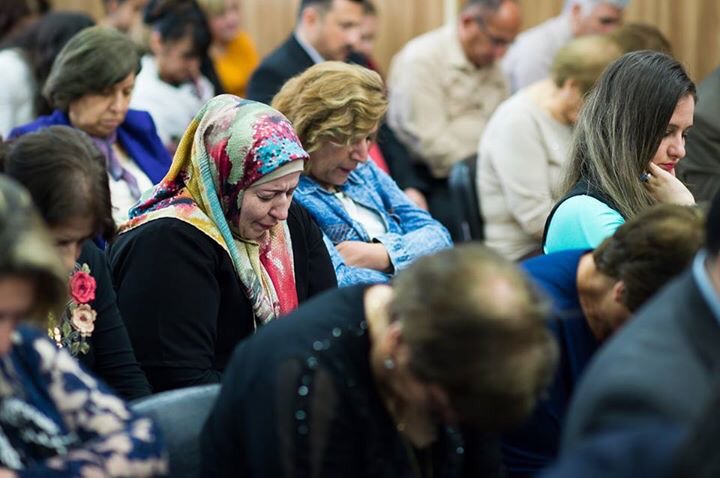
I may not meet many believers when I visit Iraq, but no doubt I will have the honor of interacting with individuals enduring immense suffering and persecution. I felt inadequate when worshipping years ago with Indian believers who had sacrificed much to identify publicly with Jesus Christ, and I am sure that I will feel the same in Iraq. My prayer for persecuted disciples is that God strengthens without hardening; a world of difference lies between firmness and callousness. My prayer for you and me is that when the inevitable crucible comes we find deeply rooted spiritual reserves upon which to call. It is not possible to endure and excel this moment and the next without previously ingrained disciplines that foster a hardy response to the fire. Today is the best opportunity to prepare my heart for what may threaten to crush it tomorrow. 

(Photo by Samaritan’s Purse)

Comments Welcomed

I am considering several ideas for my next book. One of them concerns the life and eventual transformation of a steeet boy in East Africa. The following is a brief excerpt. I welcome your comments:

He ran behind a small toy made of wire, wood and maize cobs. The “car” also had a wire passenger with head and arms that somehow resembled the boy. Child and car pushed through the pulsating crowd of late afternoon pedestrians who hardly noticed him as he moved among them with an apparent sense of where he was heading. A short distance down the street, he moved upward to a grassy plateau surrounded by a roundabout, around which rapidly moving and wildly painted vehicles competed for entrance into one of four African highways. Just before crossing the road, the boy reached down to scoop up the metal toy into his hands as he dodged a matatu to reach the safety of the familiar place where he slept and sometimes cooked scavenged potatoes or other vegetables. Other boys were there stretched out barefooted in torn clothing on the grassy elevation. Several of them greeted the boy, while others ate or sniffed glue from small plastic bottles hidden inside their grimy coats. One offered him an avocado as he chose a soft place to land.

Dreams belong to those who know their name. Hope embraces those with family. He had neither. He moved among a pack of boys that called him Njoroge, but the name resided more with them than it did him. He did not know his given name because he had never known those who kept his name and origin hidden from the past and present. There was no such thing as the future, only survival. Hunger does not ordinarily allow space for reflection, but he considered his life as he sucked an avocado and wondered what Murungu held against him.

Print or Ebook

Some of us prefer reading with a book in hand, turning pages, occasionally dropping it in our laps as we nod off. Others opt for the convenience and portability of an electronic version. No matter if it’s ink on paper or font on illumined screen, story is what entices and keeps us at it. “Ordinary Glory” is a collection of stories from my life chosen to encourage, instruct and inspire. It is available in both print and ebook versions. You may be interested in taking a look at the official press release: http://www.prweb.com/releases/2017/03/prweb14142492.htm

I welcome any and all feedback, especially suggestions for how to improve.

A Cross and Wildflowers

“A man can no more diminish God’s glory by refusing to worship Him than a lunatic can put out the sun by scribbling the word, ‘darkness’ on the walls of his cell.” ~C. S. Lewis

Worship happens when I least expect it. I completed a final interview with the Department of Homeland Security to confirm my Known Traveler status, exited DFW Airport for the hour and forty five minute drive home enduring traffic slowdowns among other frustrations of urban gridlock, and breathed easier once I left the concrete jungle behind. It’s impossible these days to avoid road construction with its narrowing lines and reduced speed limits, but I navigated all of them while retaining focus on returning home. South of the -Y- where I-35 east and I-35 west merge to become simply Interstate 35 south, I glanced across and out the passenger side window and smiled at an almost indescribable array of central Texas wildflowers. It looked as if someone emptied a paint bucket gradually alongside the highway. I hastily identified bluebonnets, Indian paintbrushes, pink evening primroses, and a few winecups thrown in for good measure. Blue and orange ribbons streamed as far as the horizon, dipping over and beyond. I looked as closely as one is permitted when traveling seventy five miles an hour, and the whole display was so dazzling that, on the spur of the moment, I pulled to the shoulder for a closer look. I lowered the passenger side window, tilted my head for a better view, and was surprised to spot a small white cross engulfed by the ocean of wildflowers. The cross stood a foot or so above the floral carpet.

I waited for a break in a traffic, quickly exited my Jeep, and walked directly toward the cross. Although I cannot fully explain my actions or emotions, it felt oddly calming to approach the cross jabbed into a sea of blue and orange while cars and eighteen wheelers sped by in another world. I stepped carefully through the flowers, not so much to prevent harming them as to keep from hurting myself, alert for any snakes that may have chosen to picnic among the bluebonnets. My wife and I comment on that danger every time we see adults positioning a child for a photograph against a floral palette–beware of snakes. A moment later, I reached the cross situated some twenty-five feet from the shoulder of the road, and looked down at the crude sculpture fashioned out of what looked like narrow intersecting boards from a weathered white picket fence. The roughly fashioned cross was evidently positioned there to mark a highway fatality. Someone lost a loved one along Interstate 35 and wanted to remember or perhaps establish a primitive warning to future travelers that danger once lurked there, taking the life of someone they cared deeply about. I had no way of knowing how long it had been there; what I did clearly observe were brilliant bluebonnets and vivid Indian paintbrushes crowded in around the cross, creating a floral frame for distant tragedy. 

What happened next defies reason. The juxtaposition of cross and flowers washed over me like a wave that would not be prevented from the shore. There was so much more there than a cross and wildflowers; tragedy transformed into glory, mourning transitioned to joy. A memorial had become a sanctuary. Without thinking, as best I can tell, I raised my arms and lifted eyes heavenward and prayed out loud. It isn’t like me to be so obvious. Ask anyone who knows me and they will tell you that I don’t do that sort of thing; conservative is a label that fits more than my political posture. To be completely honest, I am characteristically rather dull, but likely regarded as a lunatic by passersby, I was undeterred in my praise of our Creator who takes the worst life throws at us and fashions it into building blocks for eternal glory. Worship is unaware of anything but its object of adoration. Much that passes for worship these days may be better termed something else, something less. Rarely are we captivated by heaven, oblivious or at least unconcerned about what we’ll eat next, what others are wearing, the pain in our sciatica, the score from last night’s game, or the items we need to add to the calendar on our iPhone. Thank God there are unplanned moments when I remember that God is enough, that he is, in fact, everything. Worship is nothing more and nothing less than losing sight of all else save God, and enjoying him in the process. The Westminster shorter catechism begins by stating, “The chief end of man is to glorify God and enjoy him forever.” Ordinarily I grasp and respond to only as much of God as I need at the moment, making worship extremely selfish, but standing like a scarecrow in a field of wildflowers, my heart responded to what my mind still cannot fully fathom. Worship comes from a heart overfilled with the glory of God.